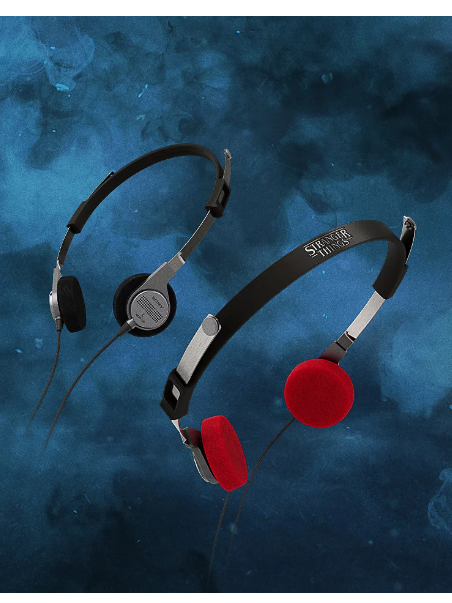
Why is Sony Re-Launching a 1979 Headphone?

The original MDR-3 headphone was introduced with Sony’s first Walkman, the TPS-L2 portable stereo cassette player back in 1979. They stood out for two reasons: they were extremely light and for the first time, users could listen to music with stereo separation on-th-go. Before that, one used bulky headphones with telephone-like spiral chords and a large 1/4 inch plug at the end of the chord. I’d like to tell you about my experience with the original Sony headphones, and why Sony is taking this risk by relaunching them in a market dominated by Bluetooth headphones.
But first, let’s take a look at the tech specs, as every headphone geek wants to know about that first!
The relaunched MDR-3R blends the old and the new. It retains the form factor and components (earpads, drivers) of the original version (MDR-3) yet introduces modern-day features like USB-C connectivity (the 3.5 mm plug is gone). There’s also an inline mic and remote unit.
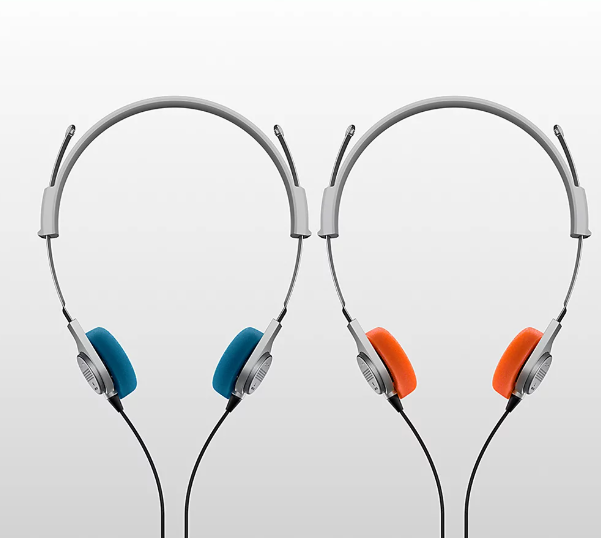
MDR-3R/ Model: YY3033 – Image: Sony
It is designed for all-day listening comfort. So it is lightweight and comfortable, weighing only 38 grams/1.34 ounces (without the cable weight). For perspective, 38 grams is roughly the weight of 38 paper clips!
Note: Earpads are regarded as consumables and need to be periodically replaced. They disintegrate after a year of use in tropicalized climate, if not stored carefully.
That’s why Sony thoughtfully included an extra set of earpads (see image).
The manual advises: Do not use, store, or leave in a place subject to high amounts of humidity, dust, smoke, or steam, or in a place subject to high temperatures, such as near a fire or a location subject to direct sunlight, such as in a car.
Rated power source is USB bus power compliant (5 V, 55 mA).
Cable: Inline remote and microphone, length approx. 1.2 m, USB Type-C plug.
Included in the box:
- Stereo Headphones (1)
- Earpads (2 sets) (Attached to Headphones
- and one spare set.)
- Documents (1 set)
The inline remote unit has an average mic, so you can use it for calls when the headphones are connected to your phone. Press a button on the remote unit to accept or reject calls. You can also mute the mic.
The media player controls in the remote unit let you skip tracks, go to the beginning of a song, listen to a previous song, and pause the music to accept a call.
Sustainability features
The product manual states: This unit has been tested and found to comply with the limits set out in the EMC regulation using a connection cable shorter than 3 m.
Electromagnetic Compatibility (EMC) regulations for earphones ensure that devices work without causing electromagnetic interference (EMI) with other electronics, or being affected by it.
Good news! The headphones and their components, consumables, parts and spares comply with the hazardous substances restriction (RoHS) of India’s E-Waste (Management) Rules.
RoHS, or Reduction in the Use of Hazardous Substances in Electrical and Electronic Equipment, began in the EU and also applies in India. It means the product contains fewer toxic materials, so it does less harm to the environment when it is disposed of.
My Experience
I have not yet bought or used the relaunched product, though I caught a glimpse of it in an episode of Stranger Things on Netflix.
But I can tell you about the original, which I bought and used in the early ’80s.
The headphones are truly lightweight. The stereo separation was entirely new to me, as this was my first pair of stereo headphones, back in 1979.
They sounded “tinny,” with little bass from their 23 mm drivers (retained in the relaunced product). Back then, that didn’t matter because I had nothing to compare them with.
Today you would notice it, because most of us have used Bluetooth earphones or headphones with extra-bass features and large drivers. But if you are hooked on nostalgia (like me), giving up some bass is a small price to pay.
These headphones are also extremely comfortable and can be worn all day with minimal discomfort. The closest I’ve come to that experience recently is with my Koss Porta Pro headphones, which I bought a year ago. They have a similar design, plus a patented feature that adjusts the headband’s pressure.
Tip: If the earpads pick up sweat, dry them before storing them.
Why is Sony Taking the Risk?
Pulling out an old product from storage and relaunching it after nearly five decades is a huge gamble. It calls for investment in assembly line infrastructure, component sourcing and experts to assemble to design, manufacture and release a high-quality product. There are marketing and logistical costs too.
At the end of the day, the company has got to sell a certain number of units to recover all those investments. To break even, Sony has to sell millions of units in world markets.
I am sure Sony’s financial analyst and marketers have done the math; this is not a “gut feel” decision based on current trends.
So here are the facts:
- Demand for wired headsets is growing
- There is widespread “digital fatigue” so users are returning to analog devices
- Current Bluetooth standards do not offer the same signal continuity as direct wired connection.
- Wireless headphones need to be periodically charged
- Sales of cassette tapes and CDs are growing
Google around and you can put some numbers to all this, if the facts need verification.
In the same vein, Sony took another gamble in early 2025 by launching a Bluetooth enable turntable (LP60-XBT). The unit is available for sale in India through authorised distributors.
Why?
Because sales of Vinyl are growing worldwide.
Guessing Sony’s Next Move
Cassette tape sales are also picking up and I won’t be surprised if Sony relaunches a cassette player next year.
I am secretly hoping for the revival of the Walkman player.
Yes, Sony did relaunch a digital version (Android) of the Walkman a few years ago. It launched new models very recently. But audio enthusiasts will tell you it is not the same thing. They want to play a physical cassette in their players – not a digital animation of a cassette on the screen.
Some Chinese companies already manufacture portable cassette players. The most noteable is a new model from cassette tape manufacturer, Maxell. It’s MXCP-P100 portable cassette player is growing in popularity, and is in demand. The player has Bluetooth connectivity and USB-C fast charging.
The writer (Brian Pereira) has tested several headphone and earphone sets over the past three decades. He is the former Editor of CHIP Magazine (Indian edition).