

With AI-aided attacks, the volume of Common Vulnerabilities and Exposures (CVEs) is exploding. The window between discovery and exploitation is shrinking from days to hours.
— Brian Pereira, Founder and Chief Editor
As of October 2026, the volume of Common Vulnerabilities and Exposures (CVEs) has reached a record-breaking projection of approximately 66,000 CVEs. This already exceeds the total number of CVEs reported in 2025, which stands at 48,174. Microsoft’s October 2026 Patch Tuesday addresses 1407 CVEs.
This is a problem of both volume and speed. How does the industry and enterprises deal with it?
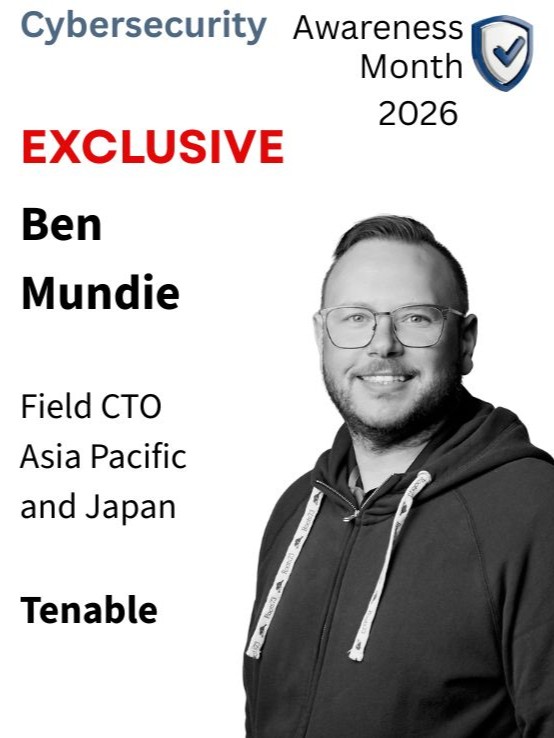
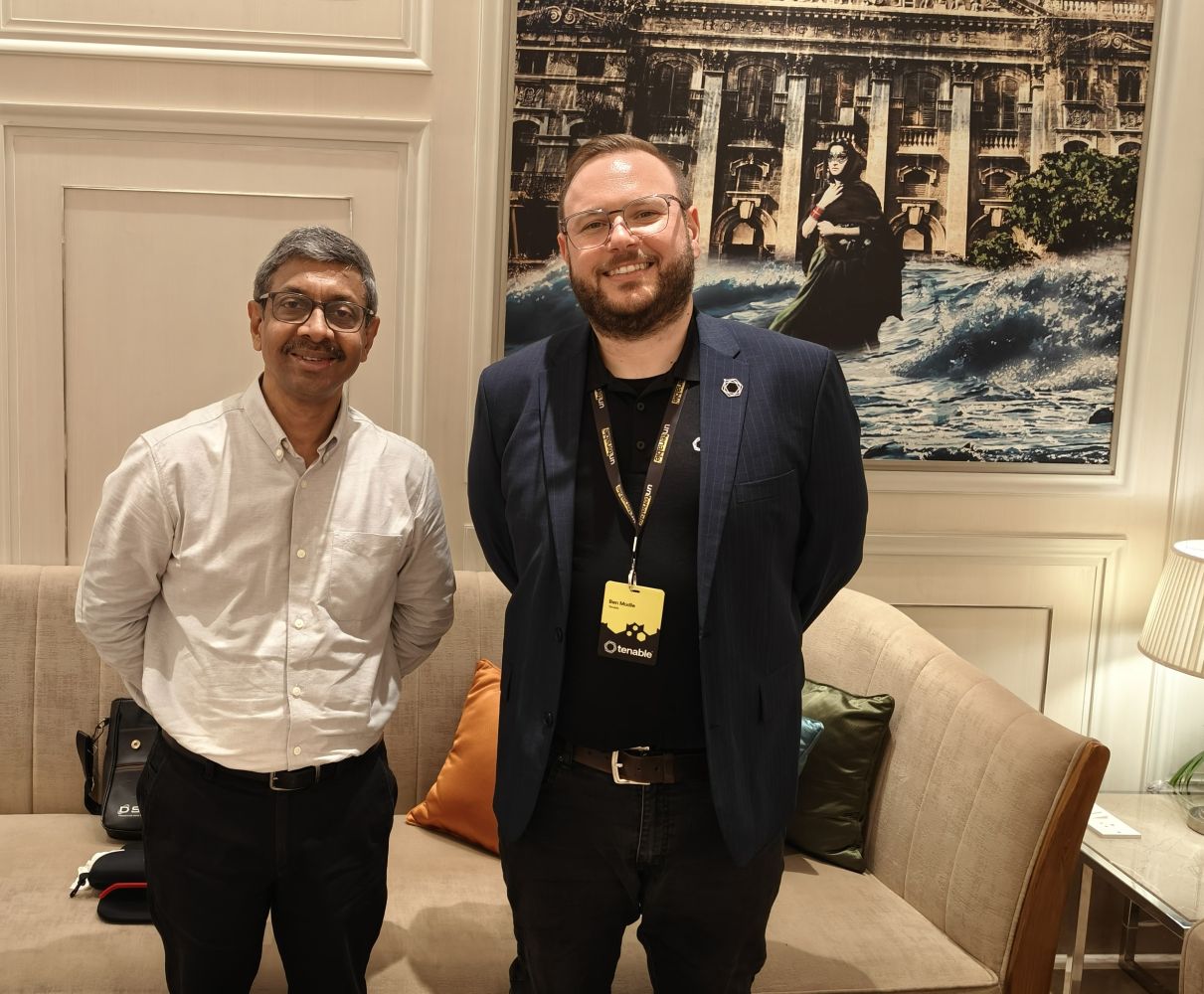
Earlier this month, Digital Creed met Ben Mundie, Field CTO, Asia Pacific and Japan at Tenable. Ben explained how AI and agents are increasing the speed of attacks and suggested strategies for enterprises to cope with the growing volume of vulnerabilties. In the course of this candid discussion, we learned that this is an issue that needs to resolved at an industry level.
He also talks about the next phase of CTEM and exposure management and Tenable One Adversary View program for customers.
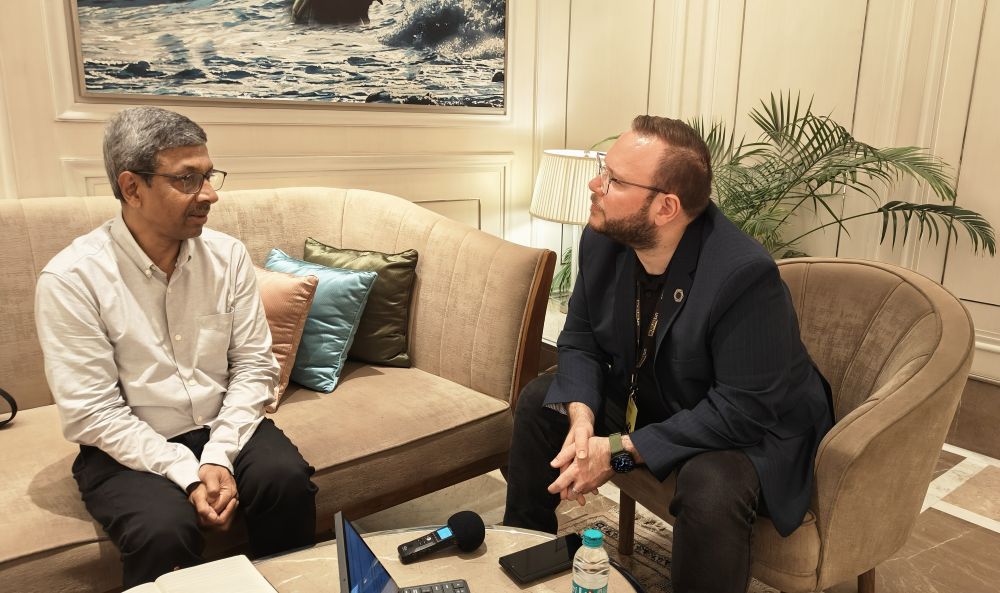
Edited excerpts:
DC: The window between discovery and exploitation is now converging. It’s now a problem of volume. So, the traditional way of patching no longer suffices. What’s the new approach?
Ben: The number of AI-aided discovery of vulnerabilities is increasing as seen through reports of platforms like Zero Day Clock, as well as the [rising] disclosures of CVEs.
We’re currently on track to close out the year probably with just under 100,000 CVEs. [This time] last year we were at 43,000 CVEs. So, we’re going to be up about 120% by the end of the year.
For organizations this is a target and speed problem. The speed of discovery is one issue, but knowing what vulnerabilities actually mean to your organization is more important than that.
In the old approach, an organization, like a bank, would report vulnerabilities, and would say, we have this many critical and this many high vulnerabilities in our environment.
These days, those metrics are useless. Because if a vulnerability comes down to, say, a critical vulnerability on a device in the environment, but can only be exploited through someone physically plugging in a serial port, while it may have a CVSS rating of 10, the likelihood of exploitation is so low that you wouldn’t want to address it today. It’s something you’ll take care of in the next firmware update.
Whereas if you have the same vulnerability, that’s much lower level, but it is remotely executable, someone can do it over the network. So you need to focus on that today.
This is a coming together of forces where you have a really large number of vulnerabilities, a broken rating system for the vulnerabilities, and teams that are just stretched to the limit.
So, organizations need to do two major things.
One, is the scoring aspect. They need to score these vulnerabilities differently. They need to use a scoring system that objectively looks at the vulnerability and says: Is it being used by ransomware operators? Is it remotely executable? Is it something we should be looking at in the context of our environment?
CVSS is currently not being enriched significantly by NVD anymore, so they’re not having all the rich information put around the vulnerability.
Because of limited [government] funding, that poses a real challenge for organizations. So, vendors like us, are having to create our own scoring systems to fill that gap for our customers.
The second thing, speed of discovery.
Most organizations up until only recently would scan their environment once every three months, and it was done for compliance purposes. Organizations need to be doing that in as close to real time as possible, because they need to know what the state of their environment is. And that’s just the vulnerability perspective that doesn’t come into the CTEM conversation, which adds all the other layers of complexity.
DC: Let’s turn the conversation to rogue AI agents, as we see increasing incidents of breaches in the past few months. I also know that Tenable was one of the vendors that signed up for Project Glasswing. What’s the update and the outcome?
Editor: Project Glasswing is an urgent cybersecurity initiative launched by Anthropic on April 7, 2026, to use frontier artificial intelligence for defensive software hardening. The project is powered by Claude Mythos Preview, an unreleased AI model capable of autonomously finding zero-day vulnerabilities, building working exploits, and chaining flaws together. Glasswing is a by invitation project with limited participation of security vendors and industry institutions.
 Ben: There are two parts to this. There’s the Glasswing and Daybreak programs from Anthropic and OpenAI respectively. We were part of the second cohort of Glasswing. And we’ve published a blog on our website from our chief security officer, Bob (Robert) Huber, that describes how we utilized Glasswing internally to assess our vulnerabilities against the Tenable software. What we found was a perspective of how much it would cost for a single engineer to utilize it, but also what the value of that agentic frontier model is, when it comes to cybersecurity.
There’s a second part to this as well. Every customer wants to get their hands on something like Glasswing to run an assessment of their environment. Whether or not they need that is debatable, but they still want to have the option of being able to use frontier reasoning rather than just the traditional AI models they have access to.
Hence, Tenable One recently announced Adversary View, which is powered by Mythos, to actually utilize Mythos-class reasoning on vulnerabilities inside that organization.
Adversary View is Tenable’s brand name for the ability for a customer to use Mythos class reasoning as a part of our Hexa agentic harness.
DC: This year there have been incidents of AI agents breaking out of controlled testing environments and breaching websites on their own. What are your views on this? Who should be held responsible for this?
 Ben: Let’s look at the Hugging Face attack as a key point. These agent attacks are leveraging existing vulnerabilities to achieve their goals. Yes, they’ve gone through the environment, and they’ve managed to get out to the public internet, but that agent hacking of Hugging Face could [also] have been done by a sophisticated threat actor. AI made it much faster. The vulnerability still existed there.
I think the model providers themselves need to understand what reasoning goes into their model because a lot of them … let’s take for instance, [the OpenAI hack on] Medicare in Australia.
A vulnerability existed and the agent found it and exploited it. I think there’s a responsibility problem on both sides.
One, the model providers themselves need to control their agents more and make sure their harnesses that they’re utilizing as a part of these … make sure that the information they’re using and gathering is done in a responsible way. They have that responsibility as a core principle for everyone.
I think these vulnerabilities already exist. Their discovery is a good thing. I don’t think it’s something we would rather the model find before a sophisticated threat actor. And I think it’s a very challenging situation, but AI can be used for good. I think there is a responsibility side on both sides.
DC: The exposure window is fast shrinking, due to AI. Will that make CTEM obsolete in the future? They’re already talking about pre-emptive exposure management or PEM. That may be CTEM 2.0. What is coming next?
 Ben: Organisations are already struggling to implement the transition between vulnerability management and exposure management. What we are seeing in the market is that organisations are needing to prioritise, and that’s what CTEM is good at. It’s having that context around when you find a vulnerability, what is the importance of that asset? What does it do? Where does it sit? Who’s using it? And how important is it? So that a decision can be made automatically of whether you need to fix that or not.
We need the asset inventory and that’s what CTEM can offer.
But we also need the vulnerability scans of the device. And we need the identity information. We need to know who’s using it and who has access to it. And we need to know where it sits, what its role is.
And those initial foundational pieces mean that they can actually operationalise an exposure management program. They’ll probably add one or two more categories in the exposure management wheel. Right now we have discovery prioritization and the usual things in the EM wheel.
I think there’s going to be a section in there where instead of just calling that Mobilization, it’s going to be Validation … it needs to get added as well, rather than just… So they validate the threat, but they don’t validate the closed exposure. It’s going to have to go beyond just the initial piece.
Photography: Digital Creed Communications
