
AI Appreciation Day Celebrates a Technology That Transforms Almost Every Industry

AI Appreciation Day, which was created in 2021, is an annual global observance held every July 16th. It celebrates the positive achievements of artificial intelligence (AI). It is a time to pause and appreciate the technology that powers everything from medical research to your smartphone’s voice assistant. It is also a time to discuss AI ethics, safety, and the future of human-machine relationships. Here’s what industry practitioners have to say on this historic occasion:
BG Mahesh, CEO, Sahamati (an SRO for the Account Aggragator ecosystem)
 AI’s true potential will not be measured by how autonomous it becomes, but by how responsibly it can act on behalf of people. As AI evolves from systems that assist humans to agents that can discover information, make decisions and execute workflows autonomously, trust becomes as important as intelligence. Responsible innovation is no longer just about building better AI models. It is about building the trusted infrastructure that enables AI agents to identify themselves, obtain user consent, operate within defined guardrails and remain accountable for every action they take.
At Sahamati Labs, we recently outlined this approach in our framework for AI agents in the Account Aggregator ecosystem, exploring how trusted AI can operate within a consent-based data-sharing architecture. The next opportunity is to extend these principles to AI, creating trusted digital rails in which identity, consent, governance and interoperability are embedded by design.
Dr. Tinku Acharya, Founder and Chairman, Videonetics
AI Appreciation Day is not just about celebrating algorithms but about recognizing AI’s ability to transform vast volumes of data into timely, meaningful decisions. India is no longer just a consumer of AI, but we are building, deploying, and scaling AI solutions across some of the world’s most complex operating environments. Our country has the talent, the scale, and an increasingly strong ecosystem of homegrown innovation to solve challenges that truly matter.
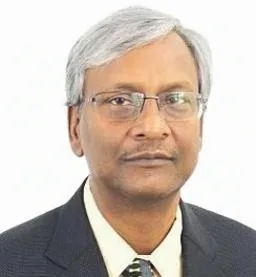
Today, AI is quietly powering many critical aspects of our businesses including command centres that help manage our cities and intelligent systems enforcing traffic regulations on our highways to the critical infrastructure that millions of people rely on every day.
As AI continues to evolve, its real value will be measured not by the sophistication of the technology itself, but by the impact it creates by making our environments safer, operations smarter, and decision-making more informed.
Harjiv Singh, Founder & CEO, CambrianEdge.ai
 What we’re celebrating this year is the recognition that human intelligence must remain at the center. We produce 1.5 million engineers annually, and a growing cohort is thinking in AI-native terms from the start. They’re designing systems where machine capability amplifies human judgment, human creativity, human leadership. Yes, only 16% of IT professionals have AI skills. Yes, AI-related job demand has crossed 1 million roles this year. But that gap is also our opportunity. We have the scale, the talent pipeline, and engineers who can build AI the right way from the beginning. The ones who understand that every system they create should make humans better at what only humans can do. That’s the future we’re building.
Sandeep Bhambure, Managing Director and Vice President – India and SAARC, Veeam Software
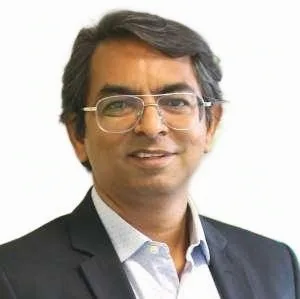 AI Appreciation Day is an opportunity to recognise not only how quickly AI is advancing, but also the responsibility that comes with deploying it at scale. As organisations across India accelerate AI adoption, trust is becoming the foundation of successful AI. AI can only deliver meaningful outcomes when it is powered by data that is accurate, protected, governed and resilient.
As AI becomes more deeply embedded in business operations, the importance of trusted data continues to grow. Our latest global research found that while 90% of organisations believe they can recover from a cyber incident, fewer than one in three ransomware victims actually recover all of their data. This trust gap highlights why resilience, visibility and recoverability are becoming essential for organisations embracing AI. The future of AI will not be defined by the sophistication of the models alone, but by the trustworthiness and resilience of the data that powers them.
Amardeep Singh, Co-Founder and President, Gutenberg
AI Appreciation Day is a good moment to be precise about what we’re actually celebrating. AI transformation was never as simple as subscribing to an LLM tool, it’s the combination of human judgment, creativity, governance, and culture that makes the technology matter. The organisations getting this right are the ones willing to rebuild how people actually work, not just bolt AI onto old processes. What matters most is the friction AI removes between an idea and its execution, giving people more room for the judgment that technology still can’t replicate.
Albert Nel, Senior Vice President, Asia, Pacific and Japan, Genesys:
 As organisations across India accelerate AI adoption, the conversation is shifting from experimentation to execution. Now with the advancements possible through agentic AI, the greatest value for enterprises will come from rethinking how customer work gets done.
At Genesys, we believe agentic AI represents a fundamental shift in customer engagement. Rather than simply generating responses, agentic AI can reason, coordinate work across systems and orchestrate actions that help achieve business outcomes. By connecting people, AI, enterprise systems and data through AI-powered experience orchestration, organisations can eliminate fragmented workflows, reduce operational friction and create the shared context needed to deliver seamless experiences across the entire customer journey.
Priti Swant, CEO and founder of Joules to Watts
 Everyone today is talking about building an AI strategy. But the more important question is: how many organizations are building the capabilities required to sustain it? Over the last two decades, I have seen GCCs evolve through several phases – from scaling operations and building maturity to driving digital transformation. We are now entering a new phase of AI-led reinvention. The organization must be ready to use it effectively. The organizations making meaningful progress with AI are not simply asking, “Where can we deploy it?” They are asking deeper questions: How should AI change the way we operate? How can it improve decision-making, strengthen our workforce, and create better outcomes for customers?
Transforming an established organization is very different from building one from the ground up. Existing businesses already have scale, people, processes, cultures, and customer commitments that must continue to perform even as the organization changes. The real challenge, therefore, is not introducing AI. It is embedding AI into an existing organization without disrupting the outcomes it is expected to deliver. That cannot be achieved through isolated use cases or short-term experimentation alone. It requires a long-term partnership focused on business growth, organizational maturity, workforce transformation, and measurable impact. That is when AI moves beyond adoption and becomes genuine transformation. And that is where sustainable competitive advantage will be created.
Sandeep Kumar Jain, Managing Director, CDK India
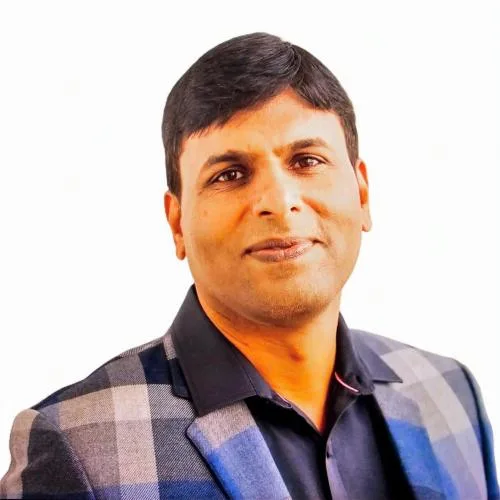 As we observe AI Appreciation Day, it is also important to recognise that the future of AI will be shaped by the choices people make around its design and use. Responsible innovation, strong governance and continuous learning must evolve alongside technological advancement. AI should empower people to think more creatively and act with greater confidence, rather than distance them from the decisions that matter.
Appreciating AI, therefore, also means investing in the human skills required to guide it well. The organisations that strike this balance will be best placed to turn AI’s potential into lasting and meaningful progress.
These quotes were received via agencies representing the individuals and their organizations.