Dentistry is going through a significant digital transformation, driven by technologies such as intraoral scanning. Laxmi Dental, is driving this larger shift, moving the industry from isolated digital tools to a fully integrated digital dentistry ecosystem that seamlessly connects every stage of the clinical and patient journey. At the core of this transformation is their i Scope360 platform.
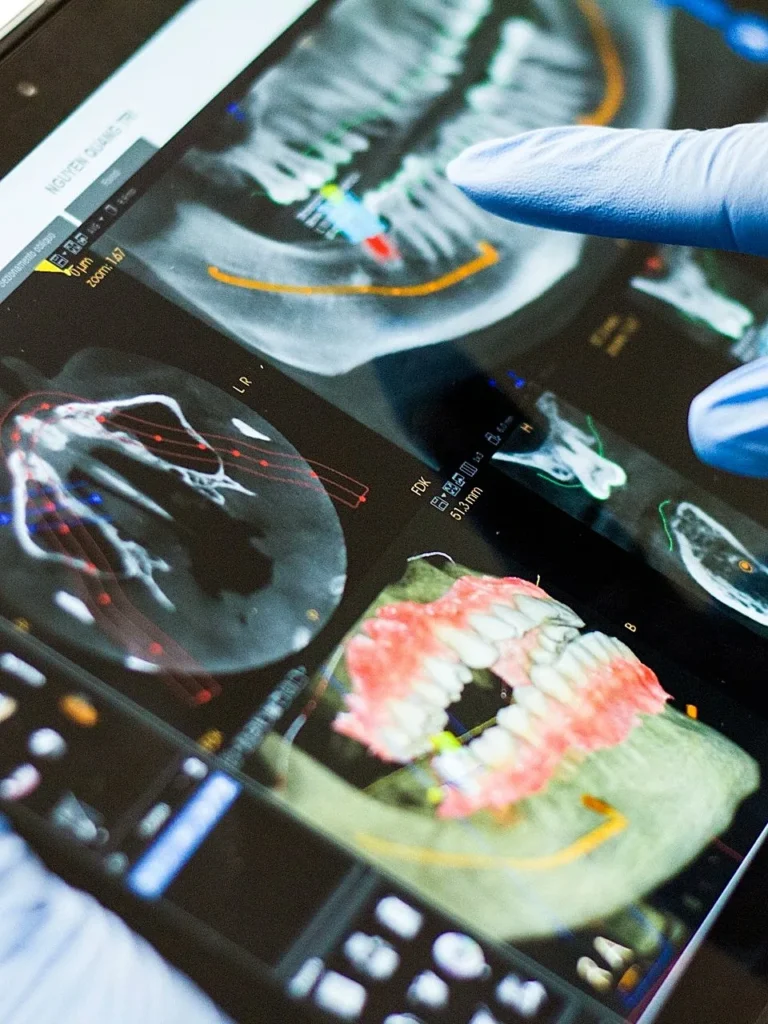
Main image by Quang Tri NGUYEN on Unsplash
Incorporated in 2004, Laxmi Dental Ltd is an integrated dental products company offering a comprehensive portfolio of dental products. It is India’s first end-to-end integrated dental products company. It is also the largest exporter among the Indian dental labs, in terms of export value as of December 2023 with presence in 95+ countries.
The company’s offerings include custom-made crowns and bridges, branded dental products such as clear aligners, thermoforming sheets, and aligner related products as a part of aligner solutions, and pediatric dental products.
 The company manufactures dental products across its six manufacturing facilities, three of which are located in Mira Road, Mumbai Metropolitan Region, Maharashtra, two in Boisar, Mumbai Metropolitan Region, Maharashtra, and one in Kochi, Kerala, and further five supporting facilities two of which are located in Mumbai, and one each in Delhi, Bengaluru, and Ahmedabad with manufacturing capabilities.
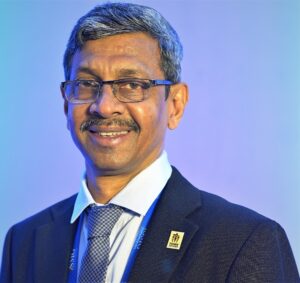
In an email interview, Sameer Merchant, Managing Director and CEO, Laxmi Dental Limited, explains how his company has harnessed digital technologies to innovate and improve patient care and deliver quality services and solutions. At the core of this transformation is their i Scope360 platform.
Edited excerpts follow:
What breakthrough digital technologies are transforming the Dentistry practice today?
Dentistry is going through a significant digital transformation, driven by technologies such as intraoral scanning, CAD/CAM, 3D printing, AI-led diagnostics, digital treatment planning and remote monitoring. What is particularly significant is that these technologies are increasingly moving beyond individual applications and becoming part of a connected workflow spanning diagnosis, treatment planning, design, manufacturing and patient monitoring.
Intraoral scanners have helped practices move away from physical impressions toward efficient digital capture. CAD/CAM and 3D printing enable customized dental products with greater consistency, while AI and remote monitoring extend clinical precision beyond traditional appointments.
At Laxmi Dental, we are driving this larger shift, moving the industry from isolated digital tools to a fully integrated digital dentistry ecosystem that seamlessly connects every stage of the clinical and patient journey.
How have you harnessed these technologies to innovate and improve patient care and deliver quality services and solutions?
Our approach is to view technology through a single lens: how it improves the overall dental workflow and, ultimately, the patient experience. We have invested across digital scanning, CAD/CAM, 3D printing, clear aligners, AI-led diagnostics, and remote monitoring to connect every stage of the dental journey.
Digital impressions eliminate manual steps inherent in traditional workflows, while digital treatment planning allows clinicians and technicians to collaborate seamlessly. This improves consistency while reducing unnecessary back-and-forth between the lab and the practice.
Our introduction of i Scope360 reflects this philosophy. By bringing together AI-enabled aligner monitoring, remote oral health assessments, and virtual consultations, the platform gives clinicians real-time visibility into a patient’s progress between physical visits.
For us, innovation isn’t just about speed. It is about using technology to elevate precision, consistency, treatment continuity, and patient engagement – all while keeping the clinician at the center of care.
What’s your idea of an ideal digitally integrated dental ecosystem?
An ideal digitally integrated ecosystem allows data to flow seamlessly across the entire patient journey. From initial diagnosis and scanning to treatment planning, design, manufacturing, and remote monitoring.
Today, many of these stages still operate as isolated silos. The true opportunity of digital dentistry is connecting them into a unified workflow. A single scan captured in-clinic should inform treatment planning, design, and fabrication without manual data transfer or repeated setup.
We have already integrated AI and analytics into this connected ecosystem led by i Scope360. By embedding these capabilities directly into the workflow, we enable clinicians to interpret data more efficiently, monitor treatment progress remotely, and detect potential issues earlier.
We are actively delivering an open, plug-and-play ecosystem where different technologies, devices, and stakeholders collaborate seamlessly; all while keeping clinical oversight firmly with the dentist.
The future of dentistry is already being shaped by this synthesis of clinical expertise, digital intelligence, and advanced manufacturing.
What’s important to scale this ecosystem, globally?
Scaling a digital dental ecosystem globally requires far more than technology. It demands robust quality systems, regulatory compliance, scalable manufacturing, interoperability, and continuous clinician education.
One of the core takeaways from our own journey has been that digital adoption cannot happen simply by introducing a new technology. Dentists need to understand how it fits into their existing workflows and how it can improve their practice. This makes training, demonstrations and hands-on education important parts of the adoption process.
For global markets, regulatory rigor is non-negotiable. Products and workflows must be engineered to meet international quality, documentation, and validation standards from day one.
India has the talent, manufacturing capabilities and technology ecosystem to build globally relevant dental solutions. The opportunity is to combine these strengths with strong quality and regulatory processes and create solutions that can scale across different markets while remaining clinically reliable and easy to adopt.
AI dominates most conversations today. How is it used in your profession? How do you use it for your research? Details about i Scope 360.
AI is becoming an important enabler across dentistry, particularly in imaging, diagnostics, treatment planning, monitoring and analytics. At the same time, we believe its most meaningful role is to support clinical expertise rather than replace it.
A dental practice generates significant amounts of information through radiographs, intraoral scans, treatment plans, patient records and treatment outcomes. AI and analytics can help organise and interpret this information, identify patterns and support clinicians in making more informed decisions.
Our acquisition of AI Dent has strengthened our capabilities in AI-led dental diagnostics and automation, particularly around dental image analysis and treatment planning. We are exploring how these capabilities can be integrated responsibly into clinical workflows to improve efficiency and consistency.
With i Scope360, we are applying this approach to the monitoring and continuity-of-care side of dentistry. The platform brings together iTrack for AI-powered aligner monitoring, iHealth for remote oral health assessments and iTrack Live for virtual consultations. Together, these capabilities allow clinicians to maintain visibility of a patient’s treatment journey between physical appointments.
The broader opportunity is to use AI to make dentistry more connected, data-driven and predictive, while ensuring that diagnosis and treatment decisions continue to rest with the dental professional.