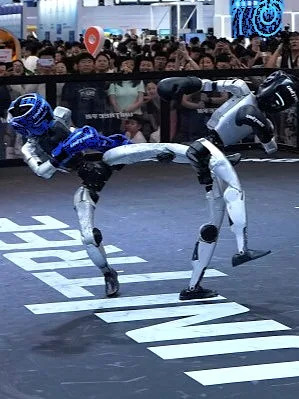
China Asserts Global Robotics Dominance at 2026 World Robot Conference

At the 2026 World Robot Conference last week, China sent a strong message to the world – it is clearly the world leader in robotics. With over 140 Chinese companies manufacturing robots, many of them in Hangzhou, investors are flocking to invest.
Image: AP News
Updated: 4 September
By Brian Pereira, Founding Editor, Digital Creed
September 3, 2026 – The 2026 World Robot Conference took place in Beijing from August 19 to August 23. It had 2,000 exhibits and participation from 300 companies. Visitors witnessed advanced mechanical and humanoid innovations. Morgan Stanley predicts that as many as 13 million humanoids could become mainstream by 2035. That number could rise to 1 billion by 2050. Nearly 90% of more than 13,000 humanoid robots delivered globally last year were made in China. Yet, it is widely acknowledged that it’s still early days for humanoid robots or humanoids, which resemble human beings in form and accept voice commands.
There are over 140 Chinese companies manufacturing robots and the ones to watch are Unitree Robotics, AgiBot, UBTECH Robotics, Galbot, Lumos Robotics, Leju, and DEEP Robotics.
Humanoids are not ready for mass-market consumption; applications are limited to industrial use such as logistics, autonomous delivery, or manufacturing. Customers are mainly industrial and research companies who are buying these robots to study and improvise them. Humanoids are programmed to do a few tasks and are yet to achieve a state of generalization.
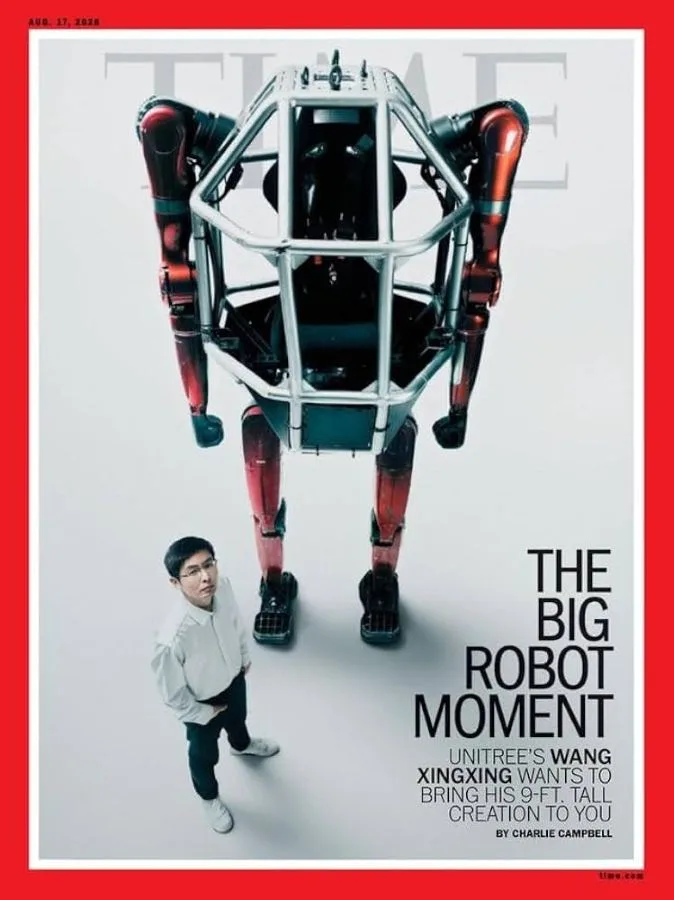
Wang Xingxing, Founder & CEO, Unitree Robotics told TIME magazine that it would take 2 – 10 years for a robot to achieve generalization. By then these robots will be able to execute 80 per cent of requested voice commands in unfamiliar environments. Once that is achieved, he expects robots to be deployed for large-scale use.
Unitree Robotics, founded in 2016, is a global robotics leader by volume, and dispatched more than 5,500 units in 2025. That’s over a quarter of the global market production. Unitree showed its H2 and G1 humanoid robots at the February 2026 spring festival gala in China. The G1 costs USD 13,500 and its R1 model sells for under USD 5,000. There is great interest in these robots and the Chinese robotics leader saw a 600 per cent increase in its share price last week.
World Robot Conference
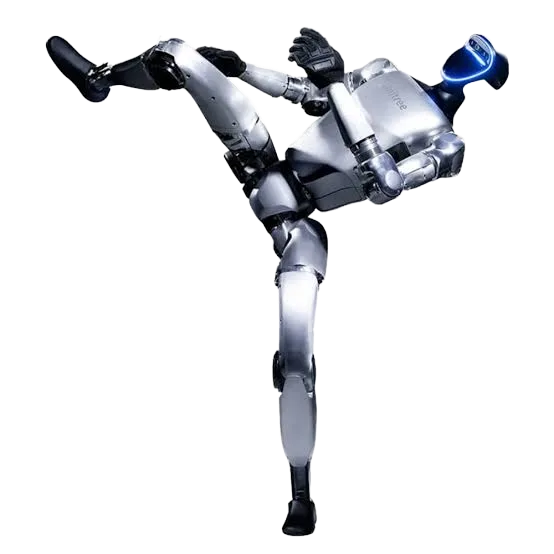 Among the innovative exhibits at the conference were humanoid robots, industrial robots, robotic dogs and even a giant robotic horse.
The humaoids drew much attention. Backflipping robots, robots performing ballroom dancing, doing handstands, folding clothes, playing ping pong, engaging in boxing or martial arts; jumping two meters in the air or ahead – or even running half marathons and breaking Usain Bolt’s 100-meter record – all stunned visitors. With such capabilities today’s humanoids make C-3PO, the tinny robot in the early Star Wars films, look primitive. For the uninitiated, C-3PO was a multi-lingual specialist and interpreter, with fluency in over six million forms of communication.
But, how many homes would acquire a $5,000 robot just to fold clothes or for sports entertainment?
A robotic dog, maybe. Sony did sell 150,000 units of Aibo, between 1999 and 2006.
Yet, China sent a strong message to the world – it is clearly the leader in robotics. With hundreds of robotics companies, many of them in Hangzhou, investors are flocking to invest.
The success of robotics companies in Hangzhou can be attributed to a number of factors: a local talent pipeline, with graduates from Zhejiang University; a collaborative startup ecosystem, and agile municipal support that fosters rapid innovation.
In 2018, this writer visited The Computing Conference in Hangzhou, by invitation of Alibaba. He witnessed robots in action used in warehouses, serving drinks in hotels, used for autonomous delivery, and even embedded in automobile navigation and traffic management systems.
See: Alibaba to Showcase Latest Technology at Flagship Event
Safety and Security
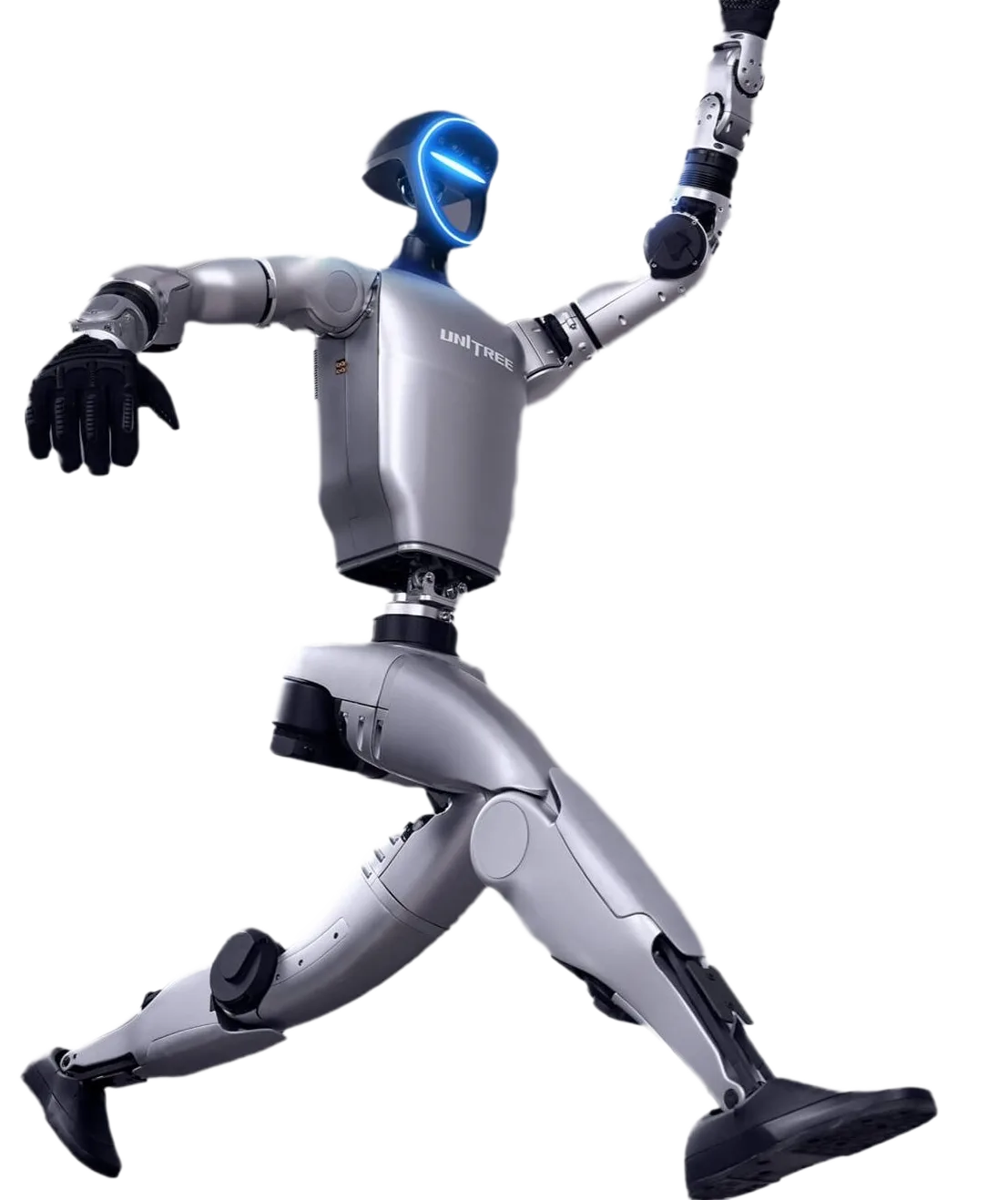 If robots are to dwell in human workspaces and in the home, then safety is a number one concern. Regulators must ensure that these robots are aware of their surroundings; robots should step out of the way when they come in the path of humans. Proximity sensors play a role here.
There are also concerns about the data privacy. Data recorded by a robot’s cameras, mics and sensors should not be relayed back to a manufacturer’s cloud, without the owner’s consent. Of course, this data would be extremely useful for training robots to become more aware about their surroundings, with the intention of improving safety. But that is a line a humaoid robot should not cross.
In the next century, humanoids could look more like humans, with their artificial hair, skin and human-like facial features. They would accompany humans on inter-planetary missions or blend in at the workplace.
Closer to that in time, a humanoid could be just another device in the home, performing chores like cooking, washing clothes and dishes; cleaning aroung the house or even fixing things. Humaoids could also be trained to look after senior citizens and offer companionship.
That would certainly make owning one worthwhile.